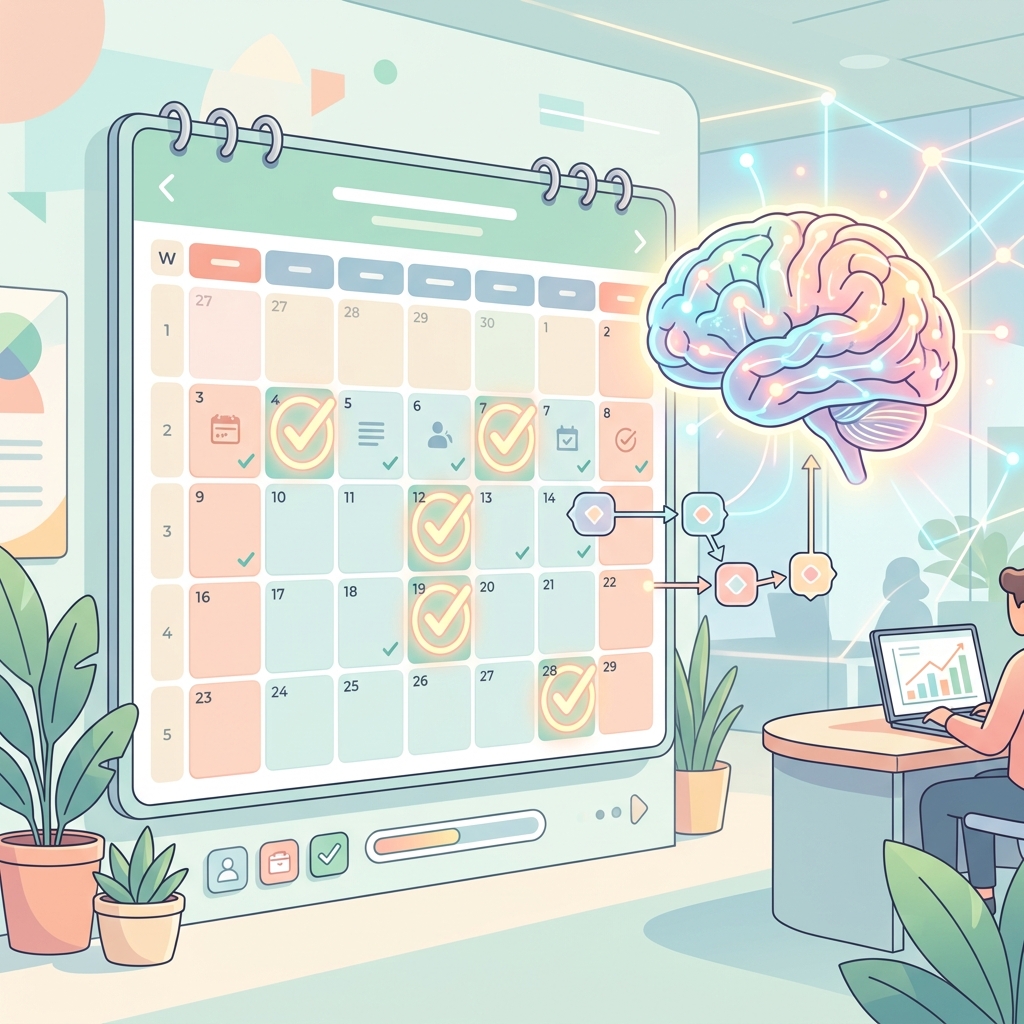
What is a Flashcard? The Science of Atomic Memory for NEET-PG

Key Takeaways (TL;DR)
- 1Understanding a medical concept is not the same as remembering it. Medical exams test your recall of thousands of microscopic details.
- 2Traditional studying treats chapters as massive, untrackable blobs of data. You never know exactly what you actually remember.
- 3Flashcards convert these massive data blobs into individual, atomic facts. Each fact becomes a distinct, trackable node.
- 4By tracking each atomic fact individually, spaced repetition algorithms can give you precise feedback and target only your weak spots.
The Science of Memory: What is a Flashcard, Really?
Ask any medical aspirant preparing for the NEET-PG or INICET what their biggest challenge is, and they will tell you the same thing: volume.
You have to master 19 subjects, containing hundreds of chapters, translating to tens of thousands of individual facts. You could fully understand how the cardiovascular system functions, yet still fail to recall the exact dosage of a specific antiarrhythmic drug under exam pressure.
In this article, we'll break down the actual science of why traditional studying fails, what a flashcard is at a data level, and how this simple tool converts chaotic medical textbooks into an organized, trackable, and highly targeted memory machine.
🧬 1. The Infinite Fact Trap: Comprehension vs Retention
Many students fall into a common trap: they confuse understanding a concept with memorizing it.
- Comprehension is high-level. You understand why a disease happens, the physiology of the organ, and how the medicine works.
- Retention is micro-level. You must recall the exact gene mutation, the diagnostic threshold number, or the specific drug side effect.
Medical exams do not just test your understanding; they test your immediate recall of micro-details. When you are looking at a 40-page chapter in a textbook, your brain is overwhelmed by a massive, continuous wall of information.
Because this information is not separated, you have no way to test yourself on it. You read it, feel a warm sense of familiarity, and tell yourself: "I understand this, so I know it."
This is what cognitive scientists call the Illusion of Competence. The moment you close the book, the details begin to decay.
📦 2. The Solution: Converting Data Blobs into "Atomic Facts"
Imagine you have a giant bucket containing 10,000 mixed puzzle pieces. If you want to find or fix a specific broken piece, it is impossible because they are all jumbled together in one massive pile.
This is exactly how traditional notes or textbook chapters are stored in your brain: a giant blob of untrackable data.
A flashcard does something simple yet revolutionary: it converts a giant data blob into atomic facts.
An atomic fact is a single, indivisible, micro-unit of information. Instead of trying to memorize a whole paragraph about Multiple Sclerosis, you break it down into separate atomic questions:
- What is the primary immunological mediator in MS? ➡️ T-cells
- What is the classic MRI finding? ➡️ Dawson's Fingers
- What is the first-line treatment for acute relapses? ➡️ High-dose Methylprednisolone
By splitting the paragraph into these separate cards, you have effectively turned a solid block of text into distinct, trackable pieces of data.
📈 3. Getting Real Feedback: The Power of Targeted Tracking
Once your study material is broken down into atomic facts, something magical happens. You can now track each fact individually.
When you passively read a textbook chapter, you have no way to score your retention. You can't say, "I know 78% of this chapter." You either feel good about it or you don't.
With flashcards, every time you look at a question and try to recall the answer, your brain does one of two things:
- It successfully recalls the fact (strengthening the neural pathway).
- It fails to recall the fact (giving you instant feedback that this specific node needs work).
Because each card is a separate file in your spaced repetition system, the algorithm (like Floww's FSRS) keeps a unique history for each fact.
- If you easily remember Dawson's Fingers, the algorithm schedules it for 14 days later.
- If you keep forgetting Methylprednisolone, the algorithm shows it to you tomorrow.
You are no longer wasting hours re-reading pages you already know. You are dynamically targeting only the specific facts that are currently slipping out of your memory.
⚖️ Traditional Study vs. Atomic Flashcard Study
Let's look at how these two models compare when preparing for high-yield competitive exams:
| Metric | Traditional Notes / Textbooks | Atomic Flashcards (Floww) |
|---|---|---|
| Information Format | Massive, continuous paragraphs (data blobs) | Indivisible, single Q&A nodes (atomic facts) |
| Cognitive Action | Passive recognition (reading over and over) | Active recall (forcing the brain to pull information) |
| Memory Feedback | Vague, subjective (e.g., "I think I know this chapter") | Binary, objective (e.g., "I recalled this fact correctly") |
| Scheduling Efficiency | Wasted time re-studying strong topics | Hyper-targeted (only showing you what you are about to forget) |
🎯 The Verdict: Take Control of Your Memory
When studying for NEET-PG, you cannot afford to guess what you remember. The stakes are too high, and the syllabus is too vast.
Flashcards are not just a simple card game; they are a precision surgical tool. They slice your massive syllabus into clear, distinct facts, giving you real-time data on exactly how strong your memory is for each individual detail.
By utilizing Floww, you gain access to an automated spacing system that automatically reads your binary feedback loops, and schedules reviews for you. You don't have to manage the data—you just have to show up, click a button, and get precise feedback on your memory.
Take control of your study journey today. Stop re-reading blindly, and start targeting your memory, piece by piece.

Written by Floww Editorial
Medical Learning Editorial Team
Providing evidence-based medical study techniques, exam preparation strategies, cognitive retention research, and spaced repetition algorithm analysis for NEET-PG & INI-CET aspirants.